Today’s topic is Tataki (敲), a form of public caning used during the Edo period (1603–1867).
At that time, Japan had adopted a policy of national isolation and was relatively peaceful and stable. As a result, punishments were rarely a major focus.
So, what role did Tataki play in Japanese history? Let’s find out.
Kaede
Hi there! It’s Kaede, your guide to Japanese history
Alright, let’s get started!
TOC
What is Tataki punishment ?
“Tataki” simply means “hitting” or “beating” in Japanese.
This was a form of corporal punishment that, as the name suggests, involved being beaten. The sentence was carried out in front of passersby, right outside the main gate of the Kodenmacho prison compound.
The convict would be stripped of their clothing, forced face-down, and then struck repeatedly on the buttocks and back with a special implement known as a hokijiri —a type of rod.
『刑罪詳説』敲刑
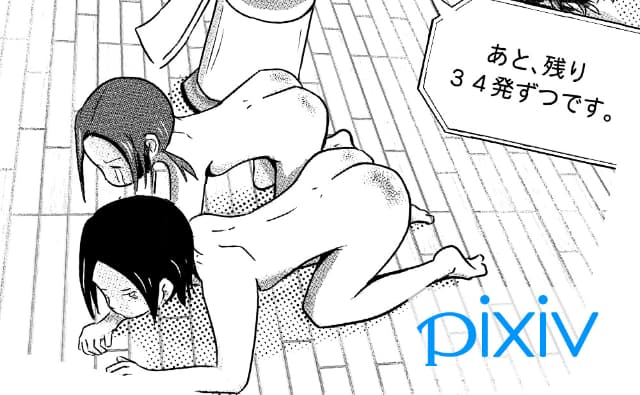
When it comes to works that feature Tataki, this one — originally a manga and later adapted into TV drama —definitely stands out. In fact, there are hardly any others…
“Lone Wolf and Cub” Article 79 of the Osadamegaki, Kazuo Koike/Goseki Kojima, Futabasha Publishers
Ah… the spankee is little bit young … but it’s ust a near-miss scene.
Kaede
Oh, and by the way…
In the live-action drama version, unlike the original manga, it’s not just an attempt—he actually got spanked, for real.
Now, this episode of Lone Wolf and Cub is titled “Article 79 of the Osadamegaki.”
The “Osadamegaki” here refers to the “Kujikata Osadamegaki”, the legal code established by Shogun Tokugawa Yoshimune.
It plays a significant role in the history of Japanese punishments, so I figured it was important to bring it up.
【Kujikata Osadamegaki 公事方御定書 (1754)】 A law established by Tokugawa Yoshimune, the 8th shogun of the Edo Shogunate.
It was an innovative legal reform—a major ideological update that shifted the focus from punishments meant as public spectacles to efforts aimed at rehabilitating criminals.
Hokijiri – a historical punishment rod
What is a hokijiri?
Chika
Hi, it’s Chika, implement guide,
First, let’s start by understanding what this intriguing item is all about
The Hokijiri was a punitive instrument used during the Edo period. Hoki means “broom,” and Shiri (Jiri) means “butt” in Japanese.
ah……
It doesn’t refer to a punishment where someone is actually beaten with a broom on the buttocks.
……Well, actually, it IS a punishment where the buttocks are beaten with a broom-like rod.
But to clarify—the term Hokijiri refers to the instrument itself, and the “butt” in this case doesn’t mean a human butt. It means the end of a broom.
Chika
Language can be tricky, can’t it?
The Hokijiri used was about 58 cm long and 9 cm in circumference. It was made by splitting a bamboo stick in two, binding it with hemp fiber, then tightly wrapping it with twisted paper cord. The grip area, around 15 cm, was covered in white leather.
There was a traditional oral method for how the paper cord was to be wrapped. 3.6 cm of hemp fiber sticks out from the tip, while 1.8 cm sticks out from the opposite end.
Just reading about it doesn’t really help us picture it clearly……
Kaede
What do you mean by “sticks out”……?
The hokijiri might show up in punishment-themed illustrations, but you hardly ever see it in period dramas or films.
Okay, so this one’s from an older, kind of edgy erotic-grotesque-style photo book (sorry)— but it’s actually a really clear example.
『残虐の女刑史』 井上橘泉著(綜合図書, 1971)
This is exactly what a Hokijiri looks like!
Chika
Alright everyone, looking at this tool, what kind of impression do you get?
Izumi-san, you’re up!
Kaede
Wha!? Um…
Oh wow, it really does say “ sticks out from the tip”!
Chika
What kind of ridiculous answer is that!? You clearly don’t love the craft enough!
Spanking time for you!
Kaede
Eep!
Some of you might have noticed just by looking at the photo—it’s actually pretty short. As I mentioned earlier, it’s about 60 centimeters.
If you’re imagining one of those big, intimidating canes from Chinese or Korean drama punishment scenes, this might feel surprisingly small in comparison.
Check out the article below for details on spanking punishments and the tools used during Korea’s Joseon Dynasty.
Regarding the size of the Hokijiri, the Faculty of Law at Kokugakuin University provides the following explanation:
The rod used for Tataki was made of straw and was short—about 57 cm in length.
Because of this, the person administering the punishment had to kneel and strike downward. This likely allowed them to observe the prisoner’s condition up close and adjust the force accordingly.
This has been the case since as early as the 6th or 7th century: laws have long included specific regulations for the size of punishment tools. They couldn’t just grab any random stick and start hitting people with it.
Whether those exact specifications were followed in practice is anyone’s guess, but at least on paper, the standards existed.
Now then, let’s take a closer look at the materials used to make the Hokijiri.
Bamboo — Asia’s legendary wonder material
Chika
Hey everyone, it’s Nanamine again!
When it comes to striking-type punishment tools used in the Edo period, I think this is pretty much what they would’ve looked like.
Broken bow
Horsewhip
Sasara (bundled bamboo strips)
A sasara is a tool made by either finely splitting the end of a bamboo stick or bundling together thin bamboo strips. Small ones are used for cleaning, and they’ve also been adapted as musical instruments.
When it comes to spanking with a sasara, one festival that comes to mind is the Onda Festival. This traditional event is still held today, where participants are playfully struck on the buttocks with a green bamboo sasara by someone dressed as a tengu (a mythical long-nosed creature), in a ritual meant to pray for a good harvest.
Kaede
(the line above) In the festival, the key is to use a GREEN bamboo sasara for the spanking. Both the green bamboo and the butt symbolize vitality.
…… But seriously, what other purpose does a big sasara even serve besides spanking?
It’s essentially the same type of instrument as the birch rod that was used in Europe.
related article
The world of birch rods – spanking implement –The birch rod is a type of whip that was used widely and for a long time in Europe. Due to its use for basic bare bottoms, it was replaced by the cane in the 19th and 20th centuries, but until then, it reigned as the most popular spanking implement. The key words for this old European implement are “Eton College” and “judicial spanking”.
Chika
but bamboo hurts more than birch, you know!
One important point here is that bamboo was widely used as a material in Japan. It was used not only for tools like the Hokijiri and sasara, but also for bows and horsewhips.
Of course, other types of wood were sometimes used as well. However, bomboo is
Cheap
Lightweight
Effortless to shape or cut
Durable
Grows at a ridiculously fast rate
given how versatile and reliable bamboo is, it was only natural to choose it whenever possible.
Chika
In fact, horsewhips were sometimes made from bamboo as well
For those, who are quite familiar with bamboo, this might be easy to understand: the effectiveness of bamboo tools comes from the combination of speed—thanks to their lightness—and their inherent stiffness.
Unlike heavier wooden implements, bamboo lacks mass, which makes it less lethal, but more suitable as a whipping tool. …Well, depending on how you use it, of course.
Spanking tools made from bamboo HAVEN’T been limited to ancient times.
We’ve got this guy right here.
Chika
Like I said, bamboo is a great material.
It supported everyday life and culture in Japan, especially for ordinary people.
Wasn’t the Edo period like 2,000 years ago? Wow, that’s impressive.
Kaede
Her knowledge is way too specific…
Okay, enough about the tools—how about we talk a bit about the law next?
Caning punishment introduced by Yoshimune, a law-obsessed shogun
I’d like to briefly explain, why flogging was suddenly introduced as a form of punishment during the Edo period.
An Intellectual Shogun
First, it’s important to remember that the Sengoku period was a brutal era where it was kill or be killed. Feudal lords had to maintain order through sheer power.
This mindset carried over into the early Edo period, where society was still chaotic and unstable. To keep things under control, punishments were deliberately cruel and served as public warnings. Criminals were executed almost casually.
However, by the mid-Edo period, as peace settled across the land, there was no longer a need to maintain public order through brutality. In fact, excessive cruelty by the authorities could stir resentment among the common people and become a source of social unrest.
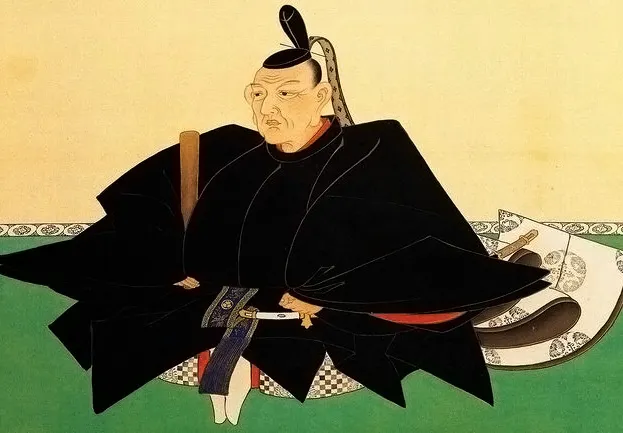
The 8th Shogun, Tokugawa Yoshimune, aimed to shift away from the ad-hoc and casual approach of issuing edicts toward a more structured legal system—something closer to modern law.
Tokugawa Yoshimune
Yoshimune had been a law enthusiast since childhood. He studied the Ming Code, a legal system from the earlier Ming Dynasty in China, which had been designed to govern a vast empire. Drawing inspiration from it, he boldly adapted its contents to suit Japanese society.
During this process, he consulted a Qing dynasty Confucian scholar named Zhu Peizhang, who was residing in Nagasaki at the time.
Their discussions on legal matters were compiled in a document titled “A Record of Questions and Answers with Zhu Peizhang Concerning Judicial Procedures.” In it, there are even references to the Chinese practice of flogging with a cane.
Yoshimune: For someone caught gambling, they could be punished with either twenty strikes with a board or fifty lashes with a whip. Which one is harsher—the “twenty board strikes” or the “fifty whip lashes”?
Zhu: They’re about the same. The whip is made of leather, so it doesn’t hurt as much as the board.
In Qing law, the association between instruments and the number of strikes was organized systematically.
When Japan incorporated the system, Yoshimune unified the instrument and classified punishments by strike counts…… 50 strikes for “light tataki” and 100 strikes for “heavy tataki.”
Kaede
The same Hokijiri was used for both 50 and 100 strikes
Simple rule, isn’t it?
Discipline Aimed at Reform
Now, we can see that Tokugawa Yoshimune was forward-thinking and highly capable. But when you hear that the punishment he introduced involved beating people with sticks, it feels a bit……off.
Kaede
Well, that’s just how it was—this was hundreds of years ago, after all
In Japan, exile had traditionally been the main form of punishment.(This included exile from the world itself)
As an island-based, farming village society, it was often more effective to expel criminals who disrupted social harmony than to simply inflict pain on them.
I wanted some more objective data, so I went through some books.
Here’s a dataset that classifies and records the application of 1,262 village laws across Japan throughout the entire Edo period.
Punishment
Application Count
Death penalty
2
Beating
2
Religious confinement
5
Ostracism
23
Exile
71
Fine (money, rice, sake, etc.)
489
『事典しらべる江戸時代(柏書房)』より
You might think that beatings (physical punishments) would have been common in village justice during the Edo period. However, at least according to the official rules, expelling offenders was the more common approach.
In the closed society of Edo-period villages, being expelled from the community often meant you could no longer make an honest living.
As a result, most people who were cast out became vagrants or turned to further crime, creating a vicious cycle of instability.
Kaede
And the neighboring areas didn’t exactly appreciate having exiles show up, either!
This is where the significance of Tokugawa Yoshimune’s formalization of caning becomes clear. As society grew more stable, a new option emerged:
Punish them (to make them reflect) — and let them stay in the community
The important thing is not to judge caning by modern standards.
Stripped and publicly beaten
Exiled from the town
At first glance, the first option might seem more inhumane. But in an era where being exiled could mean dying on the streets, that wasn’t necessarily the case.
It’s important to remember that punishments were sometimes introduced with many factors in mind—not just the individual, but also the stability of society as a whole.
Rather than simply saying, “They had barbaric punishments like flogging back then,” as a spanko, we might find it interesting to dig deeper into the meaning and background behind them.
Kaede
Of course, when talking about the present, we should use modern standards!
Oh, and there were cases of “double punishments” (niju oshioki), where offenders would receive a combination of penalties, like Tataki plus exile.
Tataki Punishment for women and boys
For women
In Japan’s ancient Ritsuryō legal system, it is clear that women were also subject to flogging and caning punishments.
For example, in the Ruiju Kokushi, a historical text compiled in the early Heian period, it is recorded that a woman named Taima Tabiko no Mina was publicly sentenced to sixty strokes with a cane in the marketplace for her involvement in a murder case.
Women were explicitly included as targets of whipping (笞) punishments, and there are several records confirming these punishments were indeed carried out. Similar practices can also be found in ancient China, where women were subjected to flogging and caning under comparable legal codes.
In contrast, under the Tataki system of the Edo period……
Women were explicitly excluded from being subjected to such punishments.
So, when a woman was sentenced to Ju-Tataki —essentially the “100-strike” punishment—it was instead converted to 100 days of detention in a disciplinary prison.
The conversion rate was 1 strike = 1 day.
In ancient times, whipping (chi 笞刑) was applied to both men and women without distinction.
Even in the Edo period, punishments like the death penalty showed no difference between genders.
As for why Tataki came to be applied differently, a quick look suggests that Confucian influence is often cited as the reason.
That said, while scholars often explain these differences through historical context, it’s also true that men and women differ physically—things like endurance and biological cycles—so from a practical perspective, the distinction wasn’t entirely unreasonable.
There was no way Edo prisons were safe.
Even if you weren’t whipped by an official, that didn’t mean you wouldn’t be beaten. In fact, because it wasn’t controlled as a formal punishment, there were no real limits.
I’ll explain more about this later.
Not a punishment — it’s just interrogation!
Chihiro
Hmm… But wait a second.
You mean those seductive scenes in punishment art—the ones with women in white underrobes, tied up and being struck again and again—were just fantasies?
Ah, no—that’s not Tataki.
That’s torture.
Well, strictly speaking, in historical terminology, it wasn’t called torture (Gomon 拷問), but rather interrogation (Sekimnon 責問).
Kaede
Interrogation could be authorized at the discretion of a city magistrate, whereas torture required permission from the senior councilors (老中) of the Tokugawa Shogunate.
Flogging was often the first step in a sekimon procedure.
That said, in modern terms, all of it would fall under the broad category of torture. Torture doesn’t discriminate between men and women—if a confession won’t come without beating, then beating becomes the only option.
What we now call kinbaku (Japanese rope bondage play), especially suspension-based techniques, can actually trace their roots back to these traditional forms of sekimon and gōmon—interrogative torture.
There was no such thing as an official “suspension punishment.” It was never a formal penalty, but rather a method to force confessions by subjecting the body to what we might now call a stress position—in BDSM terms.
Tataki was just one form of punishment formally defined by law, but in reality, there were countless beatings that didn’t fall under those official categories.
Kaede
After explaining all that, this is where we end up?
But boys got punishment
At the beginning, I mentioned something titled “Article 79 of the Osadamegaki.” So, what exactly is this mysterious Article 79…?
拾五歳以下之者御仕置之亊
In short, it defined anyone under the age of 15 as a child and laid out specific rules for how they should be punished.
For example, in cases of murder, the child would be placed in the custody of relatives or exiled to a remote island.
In theft cases, the punishment would be made one level lighter than the standard punishment given to adults.
Kaede
The most famous example of the 15-year-old punishment threshold is Yaoya Oshichi, a historical figure who has also inspired many fictional works.
The magistrate asked her, “Are you 15?” She answered honestly, “I’m 16,” and was sentenced to death.
Regarding Article 79 of the Osadamegaki, referenced in “Lone Wolf and Cub”, it ties into a provision added in 1772, after Yoshimune had passed away.
一 幼年之もの敲之儀拾五以下ニ而も敲可申
It states that even those under 15 can be subjected to Tataki.
This applied only to Tataki.
For other punishments, the general rule was to reduce the severity by one level for minors. The fact that Tataki was still fully applied to children suggests an educational intent behind it.
That said, girls under 15 would still be sentenced to imprisonment instead.
Another Kind of Spanking Inside the Prison Compound
What Exactly Was a Jail in Edo?
Before moving on to the next topic, let’s take a moment to explain what jails actually were. Understanding the nature of jails during the Edo era is crucial to grasp how punishments worked back then.
During the Edo period, a jail was essentially a detention facility for pre-sentencing detainees — people who had been arrested but whose punishment had not yet been decided.
This might be a bit of a blind spot—or something most people don’t consciously think about—but for example, in period dramas, you’ll almost never hear a magistrate declare, “I sentence you to three years in prison!”
That’s because, for the most part, that kind of punishment didn’t really exist.
In the “Osadamegaki”, imprisonment as a sentence did exist in the form of “katairo” (過怠牢 limited-term confinement) and “eiro” (永牢 unlimited-term imprisonment), but these were exceptional cases, not standard punishments.
Also, as I mentioned earlier, katairo was sometimes used as a substitute punishment—especially for women and children—in cases where a Tataki would normally have been applied.
Kaede
I mean, keeping someone locked up was just a hassle
Edo-era jails were cramped, there wasn’t much space to begin with—and on top of that, you had to feed them
Why go through all that trouble?
Despite being just a detention facility, these jails were overcrowded, and as a result, the authorities ended up allowing a form of self-governance among the inmates. The head of this internal hierarchy was known as the prison boss (牢名主 Ronamushi), so to speak. In most depictions, you’ll see him sitting cross-legged on a stack of tatami mats, lording over the others.
New prisoners, if they couldn’t offer a tsuru—a kind of “lifeline” in the form of money—would often find themselves severely mistreated by the other inmates.
A new prisoner being bullied by the prison boss
『因習秘録 みだれまんだら』3, 八月薫, 粕谷秀夫、リイド社
The Initiation of a New Prisoner
Whether or not a prisoner brought in a tsuru, there was also a ritual spanking that served as a form of initiation.
It’s something seen throughout history and across cultures—but let’s recap it just in case. This kind of spanking falls under what we call an “initiation ritual.”
If you’re wondering Spanking Machine for initiation —please refer to the article below.
related article
DeMoulin Brothers’ Eccentric but Interesting Spanking MachinesAt the beginning of the 20th century, DeMoulin Bros cataloged and sold spanking machines to numerous fraternities across the US. Probably, there has been no other company before or since that offered such an array of spanking machines as DeMoulin Bros did. In this article, I will introduce some of their peculiar merchandise.
There’s actually a novel by Futaro Yamada that describes this kind of spanking inside the jail, so let me introduce it to you.
A day later, a new inmate arrived at the women’s prison.
“By the authority of Ooka Echizen-no-kami of the South Magistrate’s Office—female vagrant from Musashi Province, age nineteen. Name: Oryu.”
A beggar woman served as a female prison attendant, living inside the women’s prison on a one-month rotation.
She inspected new female prisoners outside the jail, stripping them naked to check for prohibited items. These included satin, crepe, habutae silk, money, and blades—but this was mostly a formality.
If the satin was called “black silk” or the crepe “striped silk,” it would pass inspection. Blades were a serious matter, but as for gold and silver, far from being banned, prisoners were expected to bring them—without money, they risked being beaten half to death inside the prison.
After the beggar woman’s inspection was finished, the new prisoner, still naked, would wrap her kimono, sash, underskirt, and sandals in her arms.
At the command “Get in!”, she would move toward the small entrance door—only to be kicked from behind, stumbling forward.
Inside, waiting inmates would quickly throw a prison robe over her head and strike her exposed buttocks sharply with a wooden board.
— This was the solemn initiation ceremony for newcomers to the women’s prison.
Incidentally, the work I mentioned above has also been adapted into a live-action film.
There are two films—“Onna Ro Hisho” (おんな牢秘抄) and its sequel, “Onna Ro HishoⅡ,” (おんな牢秘抄Ⅱ) Both feature initiation scenes where the women are spanked with wooden board.
There’s also a particularly vivid moment where a woman, completely naked, gets kicked in the butt and thrown into the jail—an intense scene that’s recreated with striking clarity.
Kaede
The wooden board used for spanking here was called a kimeita
It originally served as a message board, where prisoners would write their requests and hand them to the guards.
This time, we’ve taken a closer look at Tataki —a form of corporal punishment used in the Edo period.
While it may not have much in the way of spanking elements, it’s a topic that holds undeniable importance in Japanese history, and one that naturally leads into many related subjects. So I thought it was worth covering here.
People often say Edo-era punishments were brutal—and yes, by modern standards, they certainly were. But keep in mind, this was a time of peace, and the system did include considerations like mitigating circumstances. In its own context, it was a reasonably rational approach to justice.
Unfortunately, historical sources related to spanking in Japanese history are scarce, which makes deeper research a challenge. That said, I still have a few more topics up my sleeve—so I’ll be compiling and sharing those in due course.
Kaede
Thanks for hanging in there and reading all the way!




 Kaede
Kaede
 Kaede
Kaede Chika
Chika Chika
Chika Kaede
Kaede Chika
Chika Kaede
Kaede Chika
Chika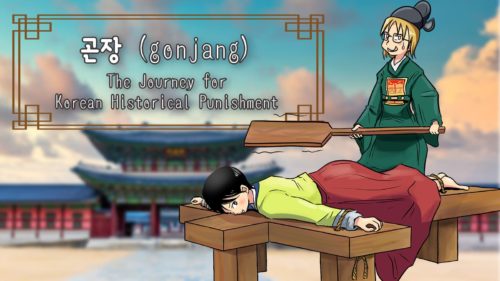

 Kaede
Kaede
 Chika
Chika

 Chihiro
 Kaede
Kaede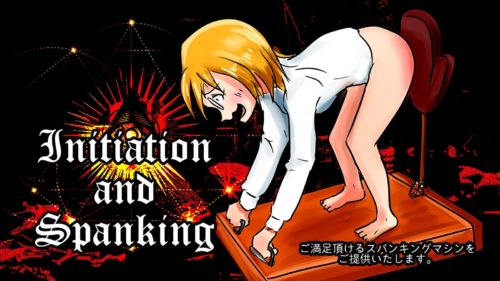
 Kaede
Kaede

